Download the History - Intent, Implementation, Impact v3
Intent
| Educating for Wisdom, Knowledge and Skills | To help grow resourceful, resilient and reflective children who are equipped with the skills, knowledge and tenacity empower themselves, their learning throughout their lives. |
| Educating for Hope and Aspiration | To inspire and enrich lives beyond current opportunities and experiences in order to open minds to the potential their future holds |
| Educating for Community and Living Well Together | To be a multi-cultural, inclusive community of individuals loved by God who feel valued and involved where we create qualities of character to enable people to flourish. |
| Educating for Dignity and Respect | That children might know how much that they are loved and valued by so that they might show dignity and respect for themselves and others by carefully and safely thinking through their actions. |
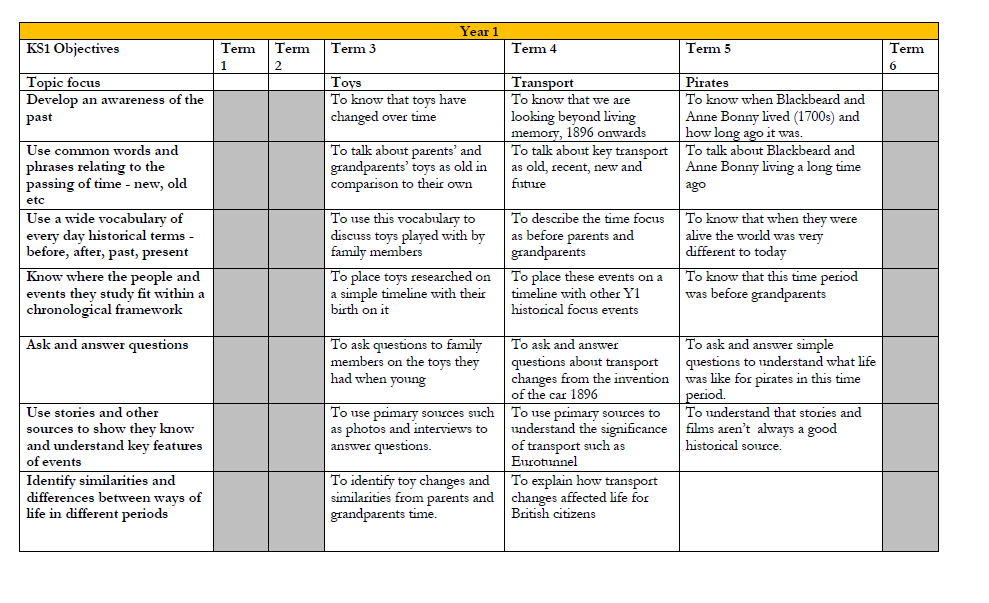
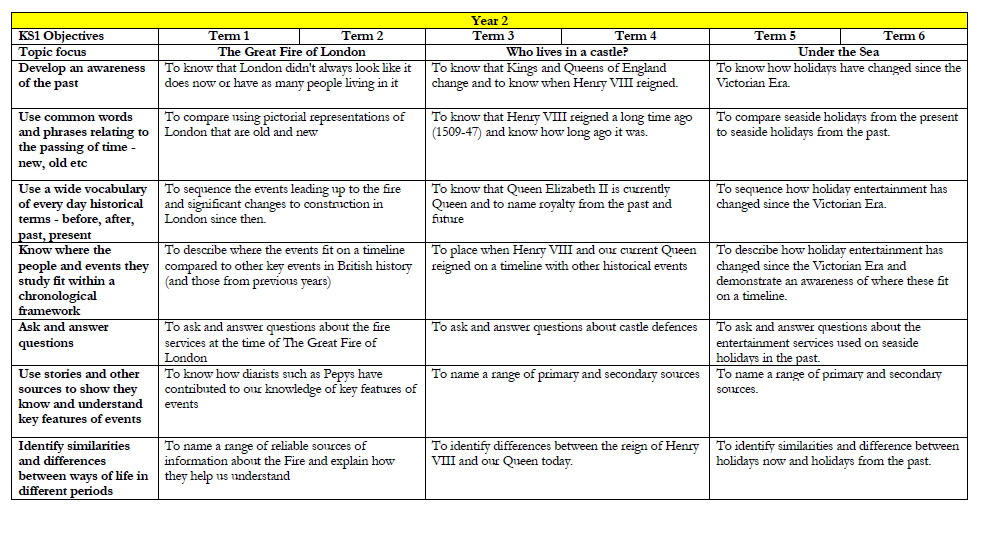
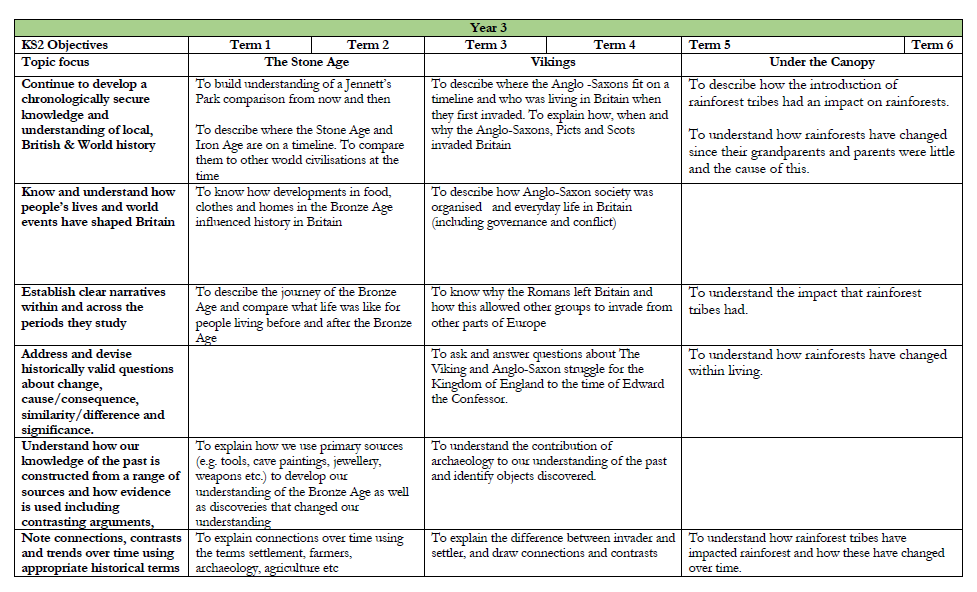
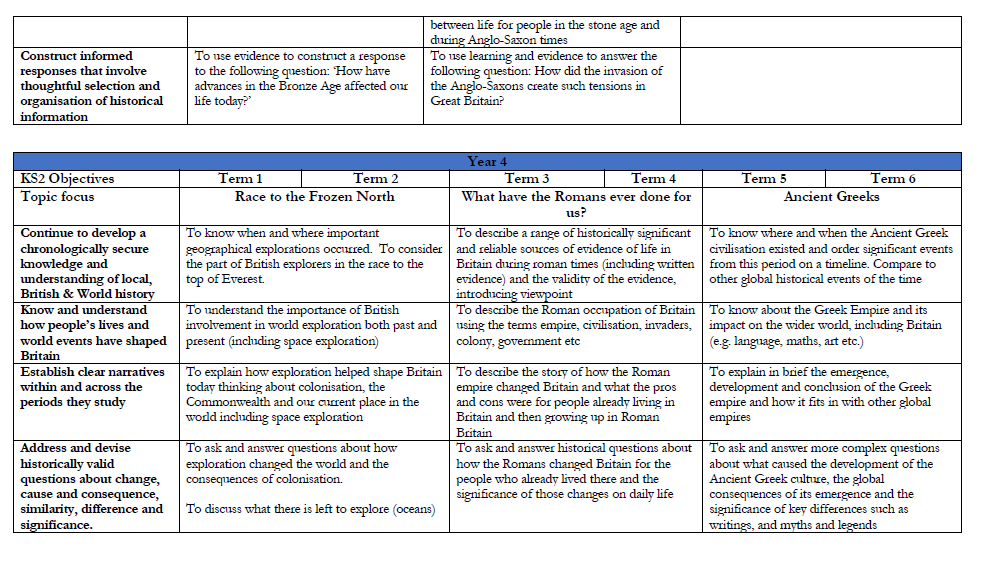
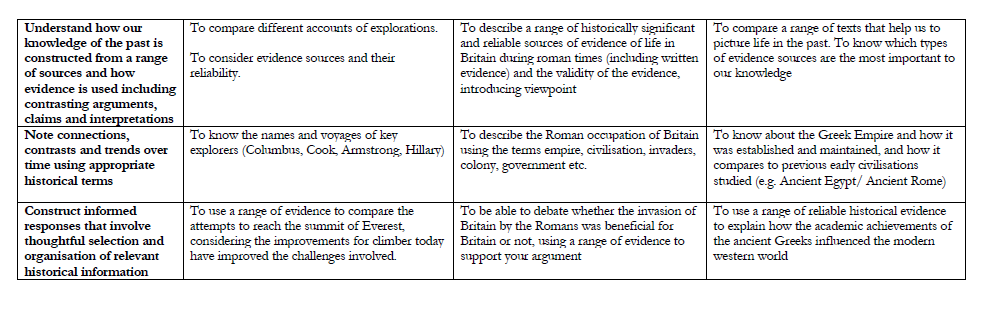
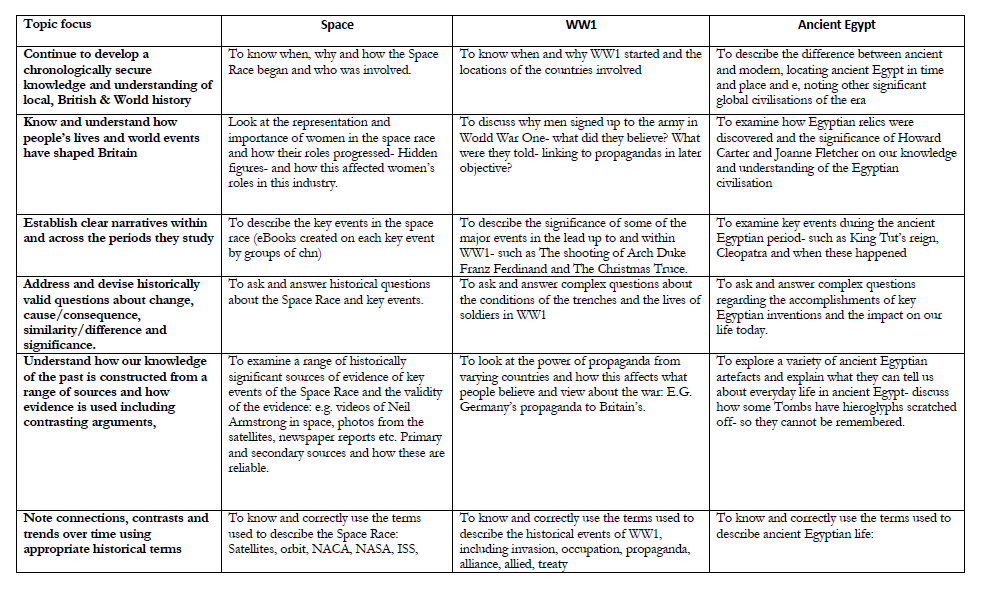
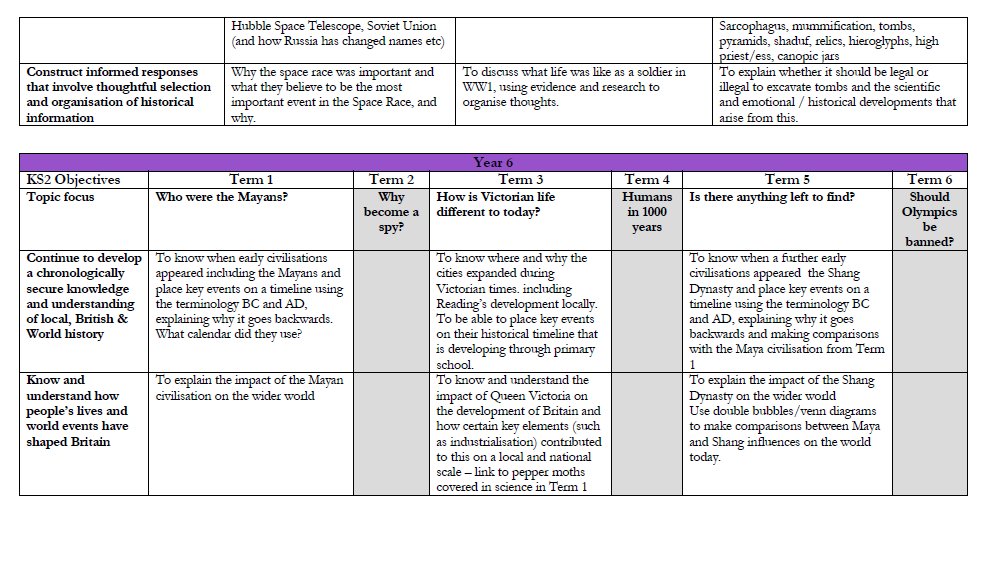
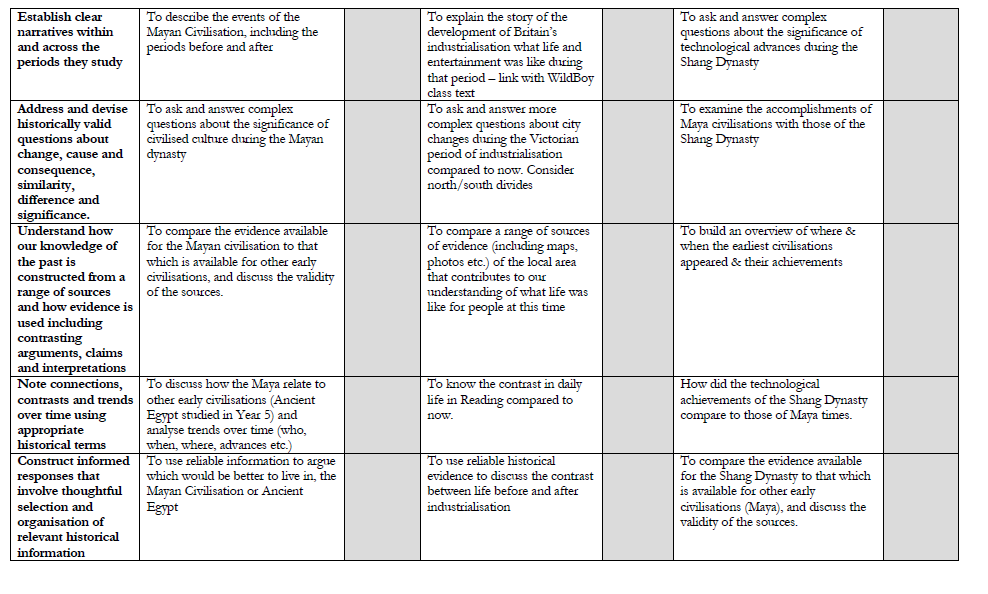
At Jennett’s Park we believe that a well-rounded History curriculum will allow children to gain a coherent knowledge and understanding of the past in Britain and the wider world. We have carefully designed our History curriculum so that children gain and build on this knowledge as they progress through the school. In addition to this, we recognise the important role that History plays in preparing our children with skills that they can use for life, raising their aspirations, understand how to be a good and responsible citizen, understanding change and societal development and a context in which to understand themselves and others. This is extremely important for children at Jennett’s Park in opening doors for our learners to access a much wider world.
Through our History curriculum, we strive to inspire pupils’ curiosity and to know more about the past. Our curriculum provides children with opportunities to ask perceptive questions, think critically, weigh evidence, sift arguments, and develop perspective and judgement. Through the teaching of History, we endeavour to teach our learners to understand the complexity of people’s lives, the process of change, the diversity of societies and relationships between different groups, as well as their own identity and the challenges of their time. We believe that teaching History in this way is important in broadening children's horizons, challenging preconceived ideas and developing life skills in order to prepare them for life after Primary School.


Impact
Through high quality first teaching of History at Jennett’s Park we will see the impact of the subject in different ways.
- Through pupil voice children will be able to talk about the skills and knowledge they have acquired.
- Children will be engaged in History lessons and want to find out more.
- Children will complete research independently through projects and homework and to further their own enjoyment about the subject or topic.
- Work will show that a range of topics is being covered, cross curricular links are made where possible and differentiated work set as appropriate.
- The school environment will be history rich through displays, resources, vocabulary etc.
- As historians, children will learn lessons from history to influence the decisions they make in their lives in the future.
- Assessments and monitoring will show standards in History will be high and will match standards in other subject areas.